

Apple Juice Benefits and Drawbacks: What the Nutrition Facts Say
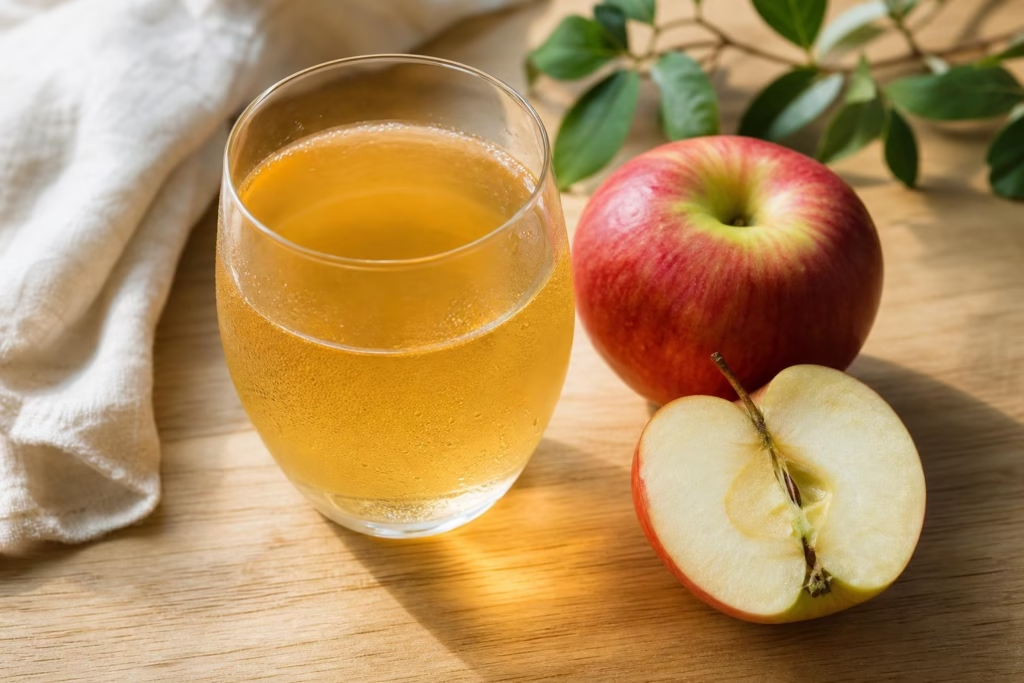
Apple juice is a familiar, easy-to-drink beverage that contains water, natural sugar, and some vitamin C and plant compounds. This guide looks at what apple juice contains, its drawbacks, and how to enjoy it sensibly.
What Does Apple Juice Contain?
1. Hydration and Replenishment
Apple juice is over 85% water, so it counts toward your fluid intake. Diluted juice is also a milder-tasting option. If a child is ill, ask a pediatrician what to give.
Pro Tip: Mix equal parts apple juice and water to cut the sugar per glass compared with undiluted juice.
2. Packed with Plant Compounds
Apple juice contains polyphenols, plant compounds found in apples. Amounts vary by brand and by how the juice is made.
Cloudy vs. Clear Juice: Cloudy apple juice is less filtered, so it usually keeps more of the apple’s pulp and plant compounds than clear juice.
3. Natural Sugar and Calories
Apple juice contains natural sugar and calories, and much less fiber than whole apples. Check the label for exact numbers.
4. Malic Acid
Apples contain malic acid, which gives apple juice its slightly tart taste.
5. Sorbitol and Fructose
Apple juice contains sorbitol and fructose, which can have a laxative effect in some people, especially in larger amounts. If your stomach is sensitive, start with a small glass.
6. Vitamin C
Some apple juices contain vitamin C, either naturally or added. Check the label to see how much a serving provides.
What Apple Juice Offers
1. Portion Size
Juice is easy to drink quickly, so it’s simple to take in more calories than you notice. A small glass, or juice diluted with water, keeps portions in check. Pairing it with a snack that contains protein or fiber is a common way to balance the sugar.
2. Vitamin C
Apples contain some vitamin C and other antioxidants, though juicing removes most of the fiber.
3. Whole Apples vs. Juice
Whole apples give you fiber and take longer to eat, which makes them more filling than juice. Juice is best seen as an occasional drink rather than a replacement for fruit.
4. A Warm, Comforting Drink
Warm apple juice with a touch of honey is a cozy drink for a chilly day. Honey should not be given to babies under 1 year old.
Downsides to Consider
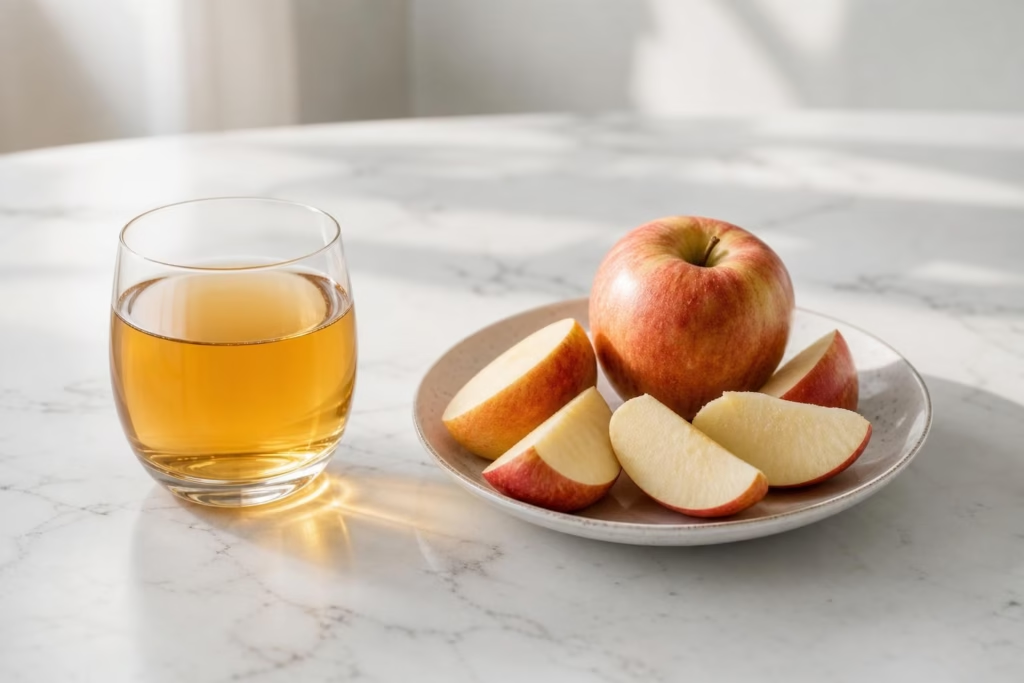
Apple juice is fine as an occasional drink, but it helps to know the trade-offs. Here are some potential downsides:
1. High in Natural Sugar, Low in Fiber
Apple juice lacks the fiber found in whole apples, leading to quicker sugar absorption and potential blood sugar spikes.
2. Potential for Weight Gain
The high calorie content of undiluted apple juice can contribute to weight gain if consumed in large quantities.
3. Tooth Decay
Sugars in apple juice feed mouth bacteria, which produce acids that erode tooth enamel. To reduce the risk:
Use a straw to drink apple juice.
Avoid swishing it in your mouth.
4. Gastrointestinal Issues
Excessive consumption may cause bloating, gas, or diarrhea due to its sorbitol and fructose content.
5. Pesticide Exposure
Non-organic apple juice may contain pesticide residues. Choosing organic is one option if you want to limit pesticide residues.
How to Incorporate Apple Juice into Your Diet
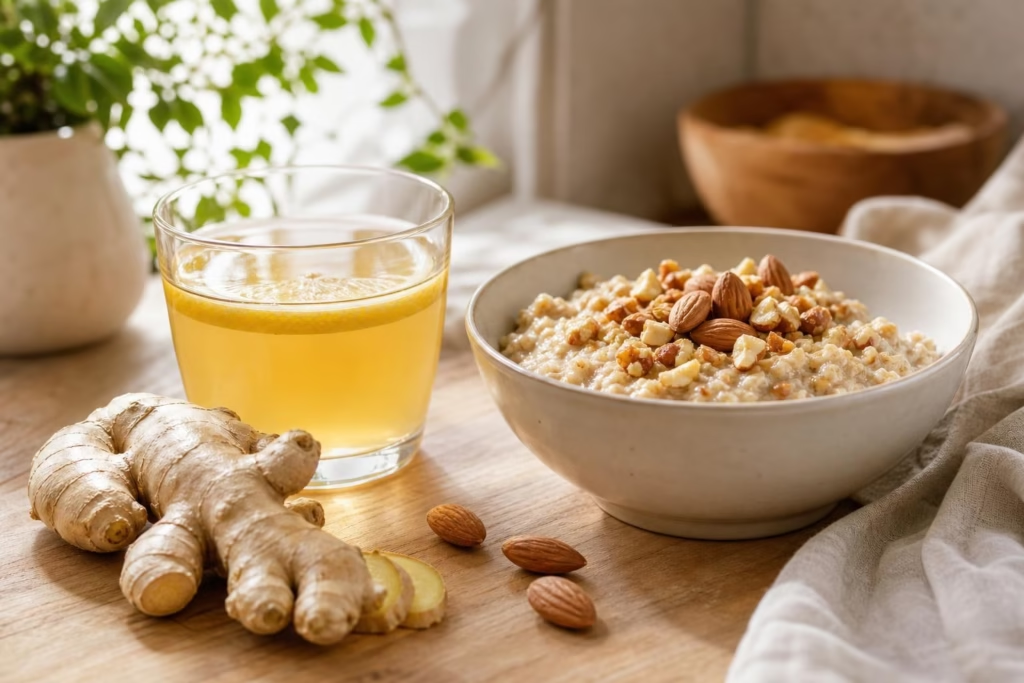
1. As a Morning Refresher
Pair apple juice with ginger or lemon for a bright, zesty flavor in the morning.
2. With a Meal or Snack
Enjoy a small glass with breakfast or a snack, ideally alongside something with protein or fiber.
3. Warm Spiced Apple Juice
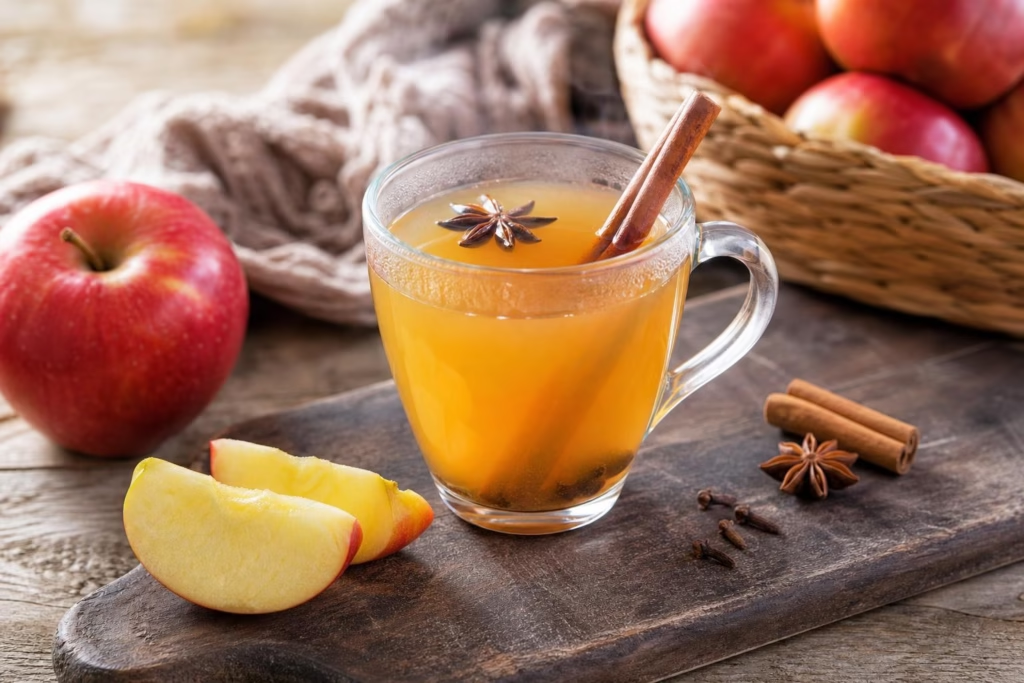
Heat apple juice gently and add a dash of cinnamon or a little honey for a cozy drink.
Tips for Choosing and Storing Apple Juice
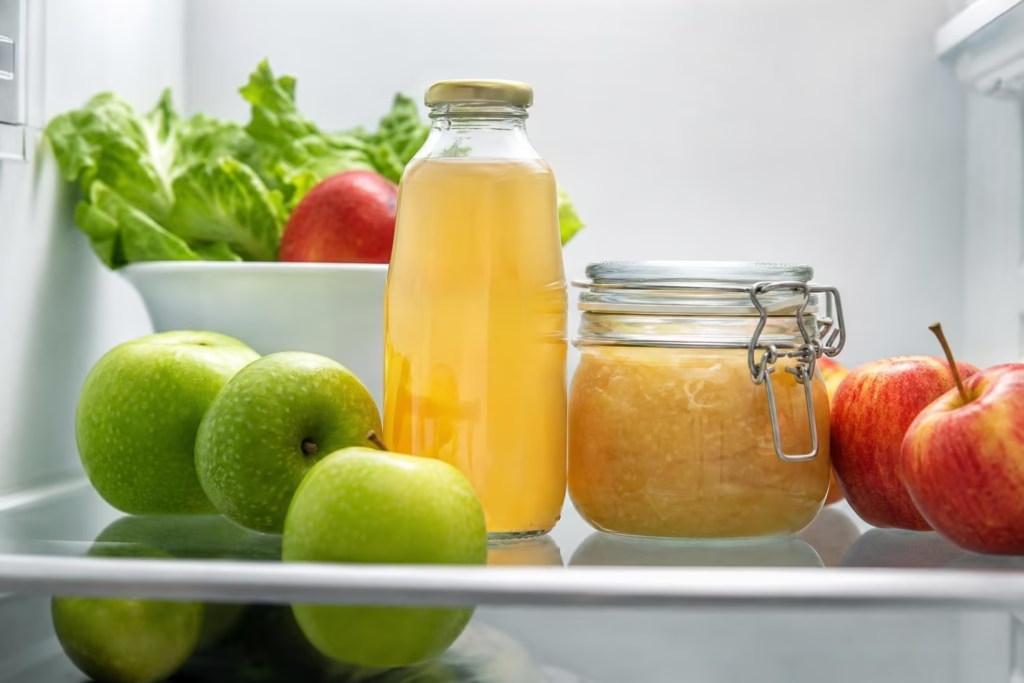
Choose 100% Juice: Avoid apple juices with added sugars or artificial ingredients.
Opt for Organic: Reduce pesticide exposure by selecting organic brands.
Store Properly: Keep apple juice in the fridge and consume it within a few days of opening for optimal freshness.
Look for Pulp: Cloudy apple juice is less filtered and may contain a little more pulp, though it still has far less fiber than a whole apple.
Apple Juice Recipes to Try
Final Thoughts
Apple juice is a versatile, tasty drink that contains water, natural sugar, and some vitamin C. Because it has little fiber, it’s best enjoyed in small servings alongside a balanced diet that includes whole fruit and vegetables. Cheers!
All the gear we recommend, in one place
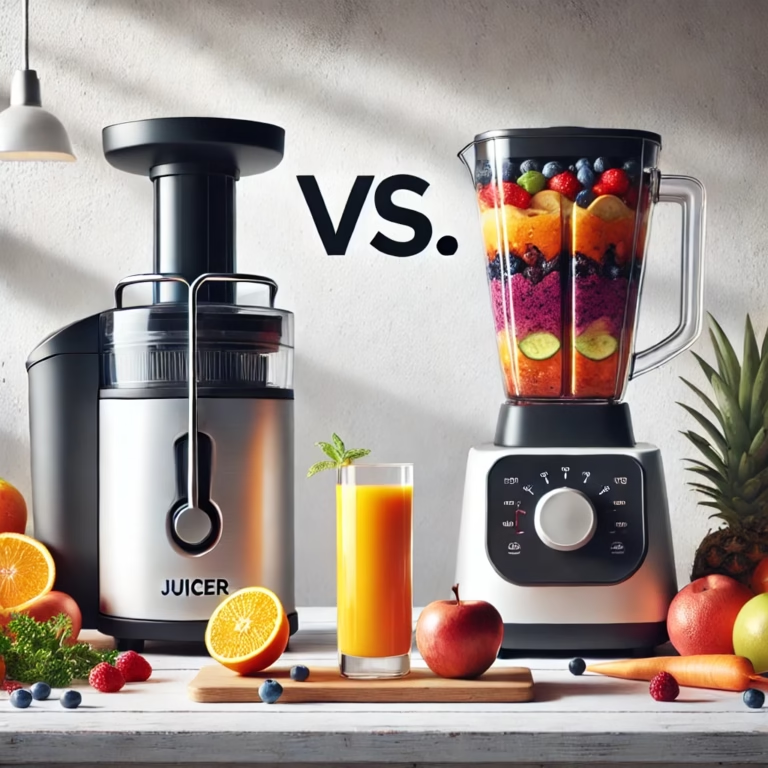
Juicers, blenders and small kitchen tools, sorted into short lists, including picks under $10.
Browse our Amazon storefrontAffiliate link: we earn from qualifying purchases at no extra cost to you. How we pick products
Frequently Asked Questions
Is apple juice healthy?
Apple juice provides some vitamins and natural sugars but very little fiber. A small glass can fit into a balanced diet, while whole apples are more filling because they keep their fiber.
How much apple juice is okay per day?
There is no single right amount. Because juice is high in sugar and low in fiber, many nutrition guidelines suggest keeping fruit juice to a small glass a day. Ask your doctor or dietitian what suits you, especially if you have diabetes.
Is homemade apple juice better than store-bought?
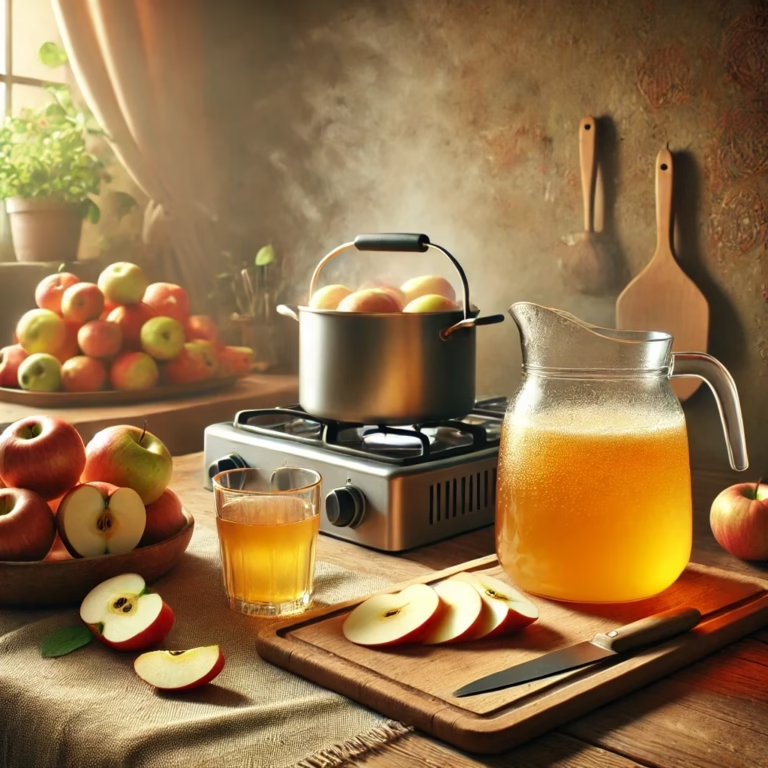
Homemade juice contains only what you put in it, but it has the same natural sugars and most of the fiber is still removed. Fresh juice is best drunk within a day or two and kept cold.
Does apple juice help digestion?
Evidence is mixed. Whole apples contain pectin, a type of fiber, but most of it is lost in clear juice. If you have ongoing digestive problems, talk to your doctor.

3 Comments