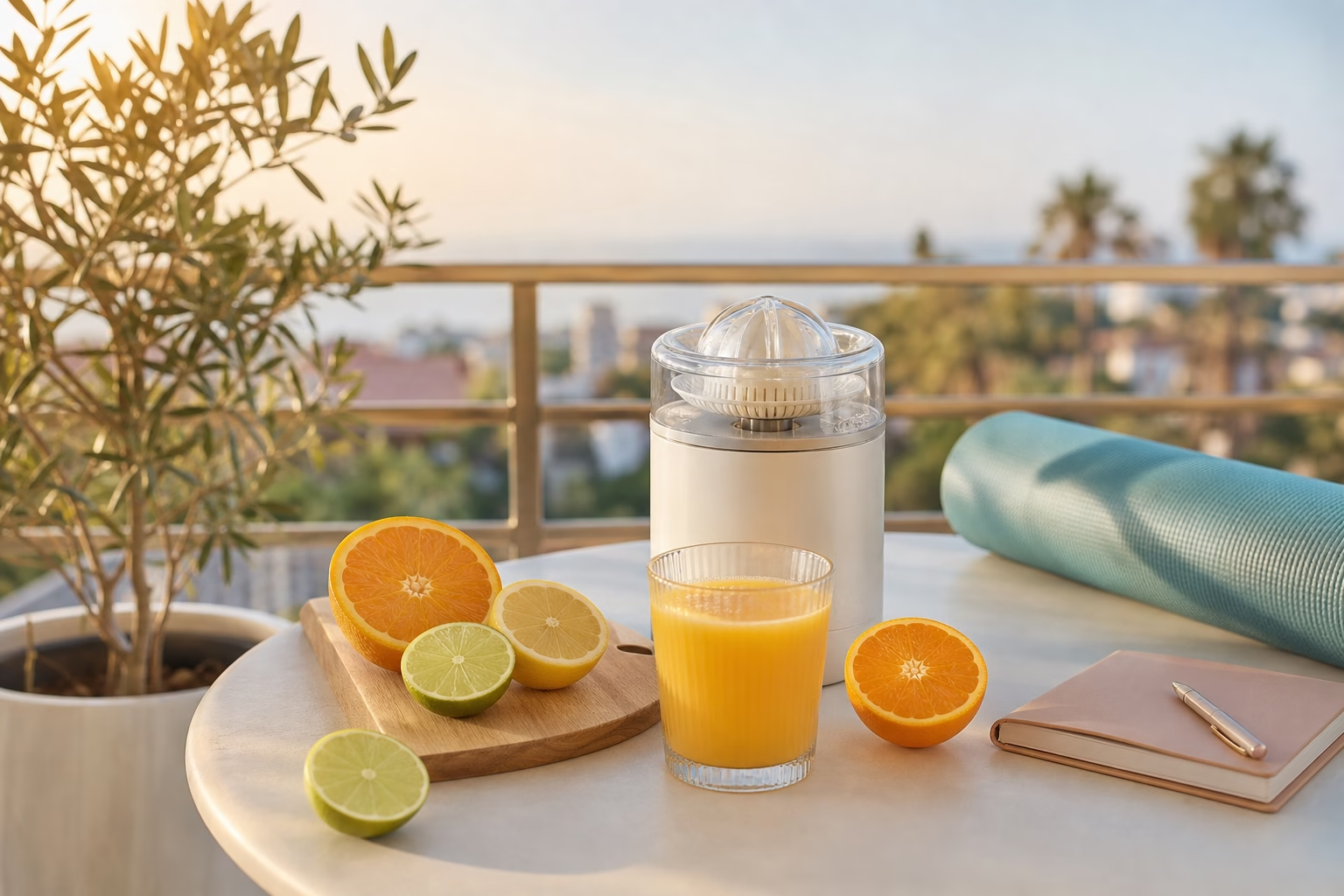
Best Electric Citrus Juicer: Cuisinart vs BLACK+DECKER
This post contains affiliate links. As an Amazon Associate, we earn from qualifying purchases at no extra cost to you.
If all you really want is fresh orange, lemon and lime juice, you probably don’t need a full juicer. The best electric citrus juicer for you is a small countertop press that squeezes halves in seconds and rinses clean.
Two names come up again and again: the Cuisinart Pulp Control Citrus Juicer (CCJ-500) and the BLACK+DECKER 32oz Electric Citrus Juicer (CJ625). Here is how they compare, based on manufacturer details and published reviews, plus who should skip both and look at a real juicer.
Quick Verdict: Which Electric Citrus Juicer Should You Pick?
Both machines do the same basic job: you press a cut citrus half onto a cone, and a motor spins it. Neither is a full juicer, and neither handles carrots, apples or greens.
- Pick the Cuisinart Pulp Control Citrus Juicer (CCJ-500) if you like clear, labeled pulp settings (low, medium, high) and a slightly larger container.
- Pick the BLACK+DECKER 32oz Electric Citrus Juicer (CJ625) if you want the simplest, lowest-budget option with pressure-activated starting and measurement markings.
- Skip both if you want leafy greens, whole-fruit juicing or large daily batches.
Both are widely reviewed on Amazon (roughly 22K reviews for the Cuisinart and 23.6K for the BLACK+DECKER, both around 4.4-4.5 stars), which tells you they are popular, though not that they suit everyone.
Cuisinart vs BLACK+DECKER: Side-by-Side
| Feature | Cuisinart CCJ-500 | BLACK+DECKER CJ625 |
|---|---|---|
| Capacity | About 34 oz (1 L) | About 32 oz (1 L), marked |
| Pulp control | 3 settings: low, medium, high | Adjustable strainer/cone mechanism |
| Starting | Auto-reversing reamer | Pressure-activated |
| Extras | Final-spin feature | Measurement markings |
| Best for | Pulp preferences, oranges and grapefruit | Simple, low-budget everyday use |
On paper they are close. The difference is mostly how you control pulp and how the machine starts.
Pulp Control: What You Actually Get
The Cuisinart gives you three clear settings, so you can go from smoother juice to a pulpier glass. The BLACK+DECKER uses an adjustable strainer and cone mechanism, which works but feels less precise.
One honest note: neither machine makes pulp-free juice. Both strain pulp rather than remove it, so “adjustable” never means “none.” If you like very smooth juice, pour it through a fine strainer or a Reusable ultra fine mesh strainer bag.
- Low pulp: good for lemonade, lime drinks and cocktails.
- Medium: a nice everyday orange juice.
- High: for people who like it thick and textured.
Capacity, Speed and Noise
Both containers hold about 1 L, which is enough for several glasses of juice. That suits a family breakfast or a pitcher of limeade, but not a week of juice for a cleanse.
As for noise, we couldn’t find standardized decibel measurements for either machine. Treat “quiet” claims with caution: these are motorized appliances and will be louder than a hand reamer or press.
- Expect a short motor whir with each half, not a long grinding session.
- If you juice early while others sleep, a manual press like the KitchenAid Citrus Juice Press Squeezer is the quieter route.
Citrus Juicers and Helpers Worth a Look
Start with the two electric citrus juicers, then add a manual option or a full juicer if your needs go beyond citrus.

1. Cuisinart Pulp Control Citrus Juicer (CCJ-500)
Three clear pulp settings and a roughly 34 oz container for oranges, lemons, limes and grapefruit.

2. BLACK+DECKER 32oz Electric Citrus Juicer (CJ625)
A very low-budget, pressure-activated option with pulp control and measurement markings.

3. KitchenAid Citrus Juice Press Squeezer
A quiet manual alternative with a seed catcher, good for occasional lemon or lime.

4. Breville JE98XL Juice Fountain Plus
A step up if you want apples, carrots and whole-fruit juicing as well as citrus.

5. Reusable ultra fine mesh strainer bags
Strain leftover pulp for smoother juice.
Tip: Choose the machine around what you will juice most. Citrus only means a citrus press; anything else means a real juicer.
Cleanup and Care
Cleanup is where many people give up on juicing, so it matters. BLACK+DECKER advertises removable, dishwasher-safe parts. For the Cuisinart, check the manual for dishwasher guidance before assuming anything.
- Rinse the cone, strainer and container right after use. Dried pulp is much harder to remove.
- Unplug before taking anything apart.
- Keep the motor base dry and never immerse it in water.
- Check the strainer for seeds and stuck pulp each time.
How to Get the Most Juice From Citrus
A few habits make any citrus juicer work better.
- Wash and scrub the fruit under running water, even if you plan to peel it or it is organic.
- Roll room-temperature fruit on the counter to loosen it up.
- Cut across the middle, not through the stem end.
- Place the cut side on the cone and press steadily. Don’t force the motor.
- Empty the pulp screen before it fills up.
Not sure how many oranges or lemons you need? Our juice yield calculator helps you plan.
Storing Fresh Citrus Juice
Refrigerate juice promptly in a clean container. A practical home guideline is to use it within about 3-4 days, and to throw it out if it smells off or looks or tastes fermented.
- Glass juice bottles or Ball Regular Mouth Pint Glass Mason Jars fill nicely and keep the fridge tidy.
- Freeze leftover lemon or lime juice in ice cube trays for later use.
Who Should Not Buy an Electric Citrus Juicer
These are single-job tools. They are a poor fit if:
- You want apple, carrot, celery or leafy green juice.
- You plan to juice a lot every day.
- You want hands-free processing.
- You have little cabinet space and only squeeze a lemon now and then. A manual press is cheaper and smaller.
In that case, start with our guide to the best juicers under $150, or read juicing vs blending to decide what fits your routine. Fresh juice has vitamin C but little fiber compared with whole fruit.
Caution: people with reflux, sensitive teeth, diabetes or a citrus allergy should limit acidic juice and talk to their doctor.
Frequently Asked Questions
Is an electric citrus juicer better than a regular juicer for oranges?
For oranges, lemons and limes only, a citrus juicer is smaller, simpler and quicker to clean. A regular juicer is better if you also want other fruits, vegetables or greens.
Do electric citrus juicers remove all the pulp?
No. Both the Cuisinart and BLACK+DECKER strain pulp rather than remove it completely. For very smooth juice, strain it again through a fine mesh bag.
How long does fresh citrus juice last in the fridge?
A practical guideline is about 3-4 days in a clean, covered container. Discard it if it smells off or looks or tastes fermented.
Are electric citrus juicers loud?
We found no standardized noise measurements, so treat quiet claims as uncertain. They are motorized and will be louder than a manual press.
Can I juice limes and lemons in these machines?
Yes, both are designed for oranges, lemons, limes and similar citrus. Cut the fruit across the middle and press steadily without forcing it.
For orange, lemon and lime juice, either machine can be the best electric citrus juicer for your kitchen. Choose the Cuisinart for clearer pulp settings, or the BLACK+DECKER for a simple budget option. If your juicing plans are bigger, a real juicer will serve you better. Enjoy your fresh juice!
This article is for general information only and is not medical advice. If you are pregnant, take medication or have a health condition, talk to your doctor before changing your diet or doing a juice cleanse.